Introduction to Short Deck Poker
An introduction to Short Deck poker, covering rules, gameplay flow, and essential concepts for casual and home games.

Short Deck poker, also known as 6+ Hold’em, is a faster and more aggressive version of traditional Hold’em. It uses a reduced deck, which changes hand values and increases action.
By removing all cards below six, the game creates more frequent strong hands and more dramatic showdowns. The structure feels familiar, but the strategy shifts quickly.
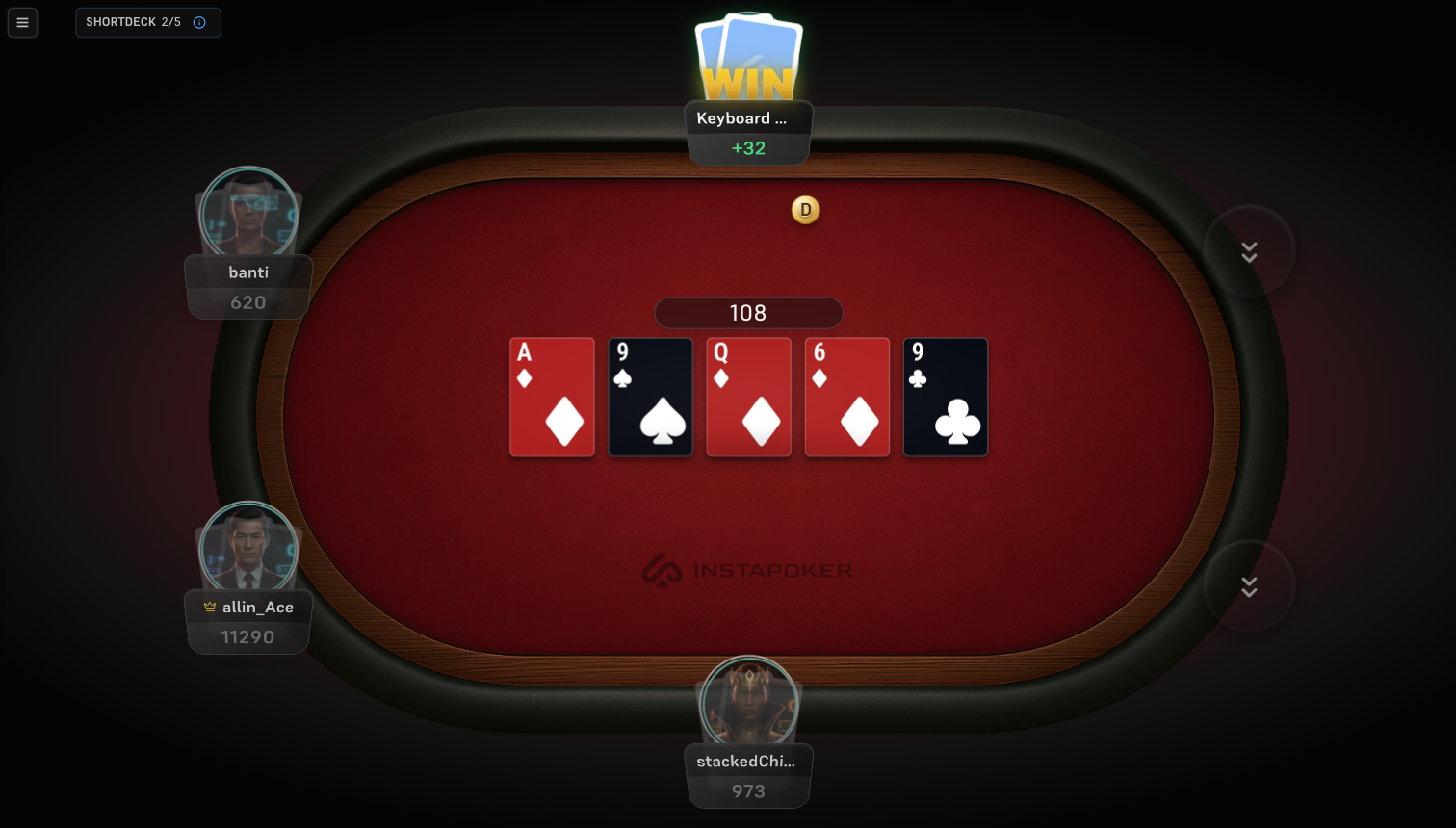
What is Short Deck Poker
Short Deck is played similarly to Hold’em, but with a 36 card deck instead of 52. All cards from 2 to 5 are removed.
Each player gets two hole cards, and five community cards are dealt. Players make the best five card hand from any combination of their cards and the board.
Because of the smaller deck, probabilities change and hand strengths shift compared to standard poker.
Basic flow of a hand
The gameplay flow is almost identical to Hold’em.
1. Antes and button blind
- Most games use antes instead of traditional blinds
- The button usually posts a single larger blind
2. Hole cards
- Each player is dealt two cards face down
3. Preflop betting
- Players act in turn
- Options include fold, call, or raise
4. Flop
- Three community cards are revealed
- Betting round begins
5. Turn
- Fourth community card is dealt
- Betting continues
6. River
- Fifth community card is revealed
- Final betting round
7. Showdown
- Remaining players reveal hands
- Best five card combination wins
Hand rankings overview
Hand rankings are slightly different in Short Deck due to the reduced deck.
| Hand | Description |
|---|---|
| High Card | No matching cards |
| Pair | Two cards of same rank |
| Two Pair | Two different pairs |
| Three of a Kind | Three cards of same rank |
| Straight | Five consecutive ranks |
| Flush | Five cards of same suit |
| Full House | Three of a kind plus a pair |
| Four of a Kind | Four cards of same rank |
| Straight Flush | Straight with same suit |
In many Short Deck games, a flush beats a full house because flushes are harder to make with fewer cards.
Key concepts to know
Short Deck changes how you should think about hands and probabilities.
Strong hands happen more often
With fewer cards, pairs, trips, and straights appear more frequently. You should expect more action and bigger hands at showdown.
Hand rankings can differ
Flushes may beat full houses depending on the rules. Always confirm the ranking before playing.
Drawing odds are different
Removing low cards increases the chance of hitting straights. Hands connect more often with the board.
Aggression is rewarded
Faster gameplay and closer equities mean aggressive play can be very effective.
Preflop hand values shift
Some hands that are weak in Hold’em become playable in Short Deck due to improved connectivity.
Why Short Deck is popular
- Faster pace with more action
- Frequent strong hands and exciting showdowns
- Simple to learn for Hold’em players
- Fresh strategic challenge
Getting started
Short Deck is easy to pick up if you already know Hold’em, but expect adjustments.
- Double check hand rankings before playing
- Be ready for stronger average hands
- Play more connected cards
- Adapt to higher variance
Short Deck keeps the core feel of poker while adding speed and intensity. Once you adjust to the new probabilities, it becomes a highly engaging format.