Introduction to Pot Limit Omaha Poker
An introduction to Pot Limit Omaha poker, covering rules, gameplay flow, and essential concepts for casual and home games.

Pot Limit Omaha, often called PLO, is a fast action poker variant known for bigger hands and more draws. It shares the same structure as Hold’em, but with one key twist that changes everything.
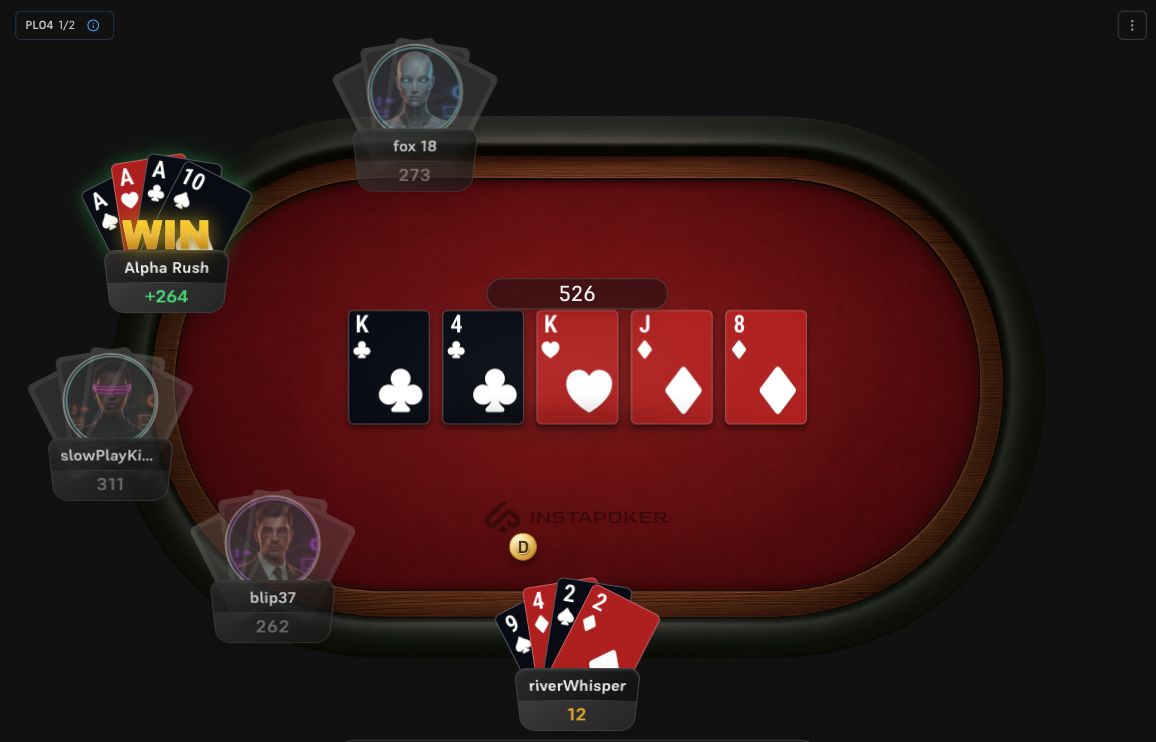
Each player is dealt four private cards instead of two, and must use exactly two of them along with three community cards. This creates more possibilities, stronger hands, and more complex decisions.
What is Pot Limit Omaha
Pot Limit Omaha is a community card poker game played with 2 to 10 players. Each player receives four hole cards, and five community cards are dealt face up.
To make a hand, players must use exactly two of their hole cards and exactly three community cards. You cannot use one or three hole cards.
The “pot limit” rule means the maximum bet is limited to the size of the current pot. You cannot go all in freely unless the pot is already large enough.
Basic flow of a hand
The structure of a PLO hand is similar to Hold’em, but the decision making is very different due to the extra cards.
1. Blinds
- Two players post the small blind and big blind
- This creates an initial pot to play for
2. Hole cards
- Each player is dealt four cards face down
- Only the player can see their cards
3. Preflop betting
- Players act in turn
- Bets and raises are limited by the pot size
4. Flop
- Three community cards are dealt
- Betting round begins
5. Turn
- Fourth community card is revealed
- Another round of betting
6. River
- Fifth community card is dealt
- Final betting round
7. Showdown
- Players reveal hands
- Best five card hand using exactly two hole cards wins
Hand rankings overview
Hand rankings in PLO are the same as Hold’em, but stronger hands appear more often.
| Hand | Description |
|---|---|
| High Card | No matching cards |
| Pair | Two cards of same rank |
| Two Pair | Two different pairs |
| Three of a Kind | Three cards of same rank |
| Straight | Five consecutive ranks |
| Flush | Five cards of same suit |
| Full House | Three of a kind plus a pair |
| Four of a Kind | Four cards of same rank |
| Straight Flush | Straight with same suit |
| Royal Flush | Highest possible straight flush |
Key concepts to know
Pot Limit Omaha rewards a slightly different mindset compared to Hold’em.
You must use exactly two cards
This is the most common mistake for new players. Even if the board looks strong, your hand must include exactly two of your hole cards.
Hands run closer in equity
With four cards, players often have strong draws or made hands at the same time. Big favorites are rare, so swings are common.
Drawing hands are powerful
Wraps, flush draws, and combo draws can be very strong. Many hands improve on later streets, making aggression important.
Pot control matters even more
Since the pot grows quickly, managing bet sizes is critical. You cannot always rely on all in bets to simplify decisions.
Nuts matter
In PLO, second best hands lose big pots. You should often aim for the best possible hand rather than just a strong one.
Why Pot Limit Omaha is popular
- More action with bigger hands
- Frequent draws and exciting turn and river cards
- Strategic depth with complex decisions
- Great for players who enjoy dynamic games
Getting started
PLO can feel chaotic at first, but focusing on structure helps.
- Always check how your hand connects with the board
- Prioritize hands that can make the nuts
- Be cautious with medium strength hands
- Watch how pots grow quickly
Pot Limit Omaha is a game of strong combinations and careful decisions. Once you adjust to using four cards, the game opens up in a very different way from Hold’em.