Introduction to No Limit Hold’em Poker
An introduction to No Limit Hold’em poker, covering rules, gameplay flow, and essential concepts for casual and home games.

No Limit Hold’em is the most popular poker variant in the world. It is the format used in major tournaments, home games, and most online tables. The game combines simple rules with deep strategy, making it easy to learn but hard to master.
At its core, No Limit Hold’em is about making the best five card hand or convincing your opponents to fold before showdown. Each player gets two private cards, shares five community cards, and can bet any amount of their chips at any time.
What is No Limit Hold’em
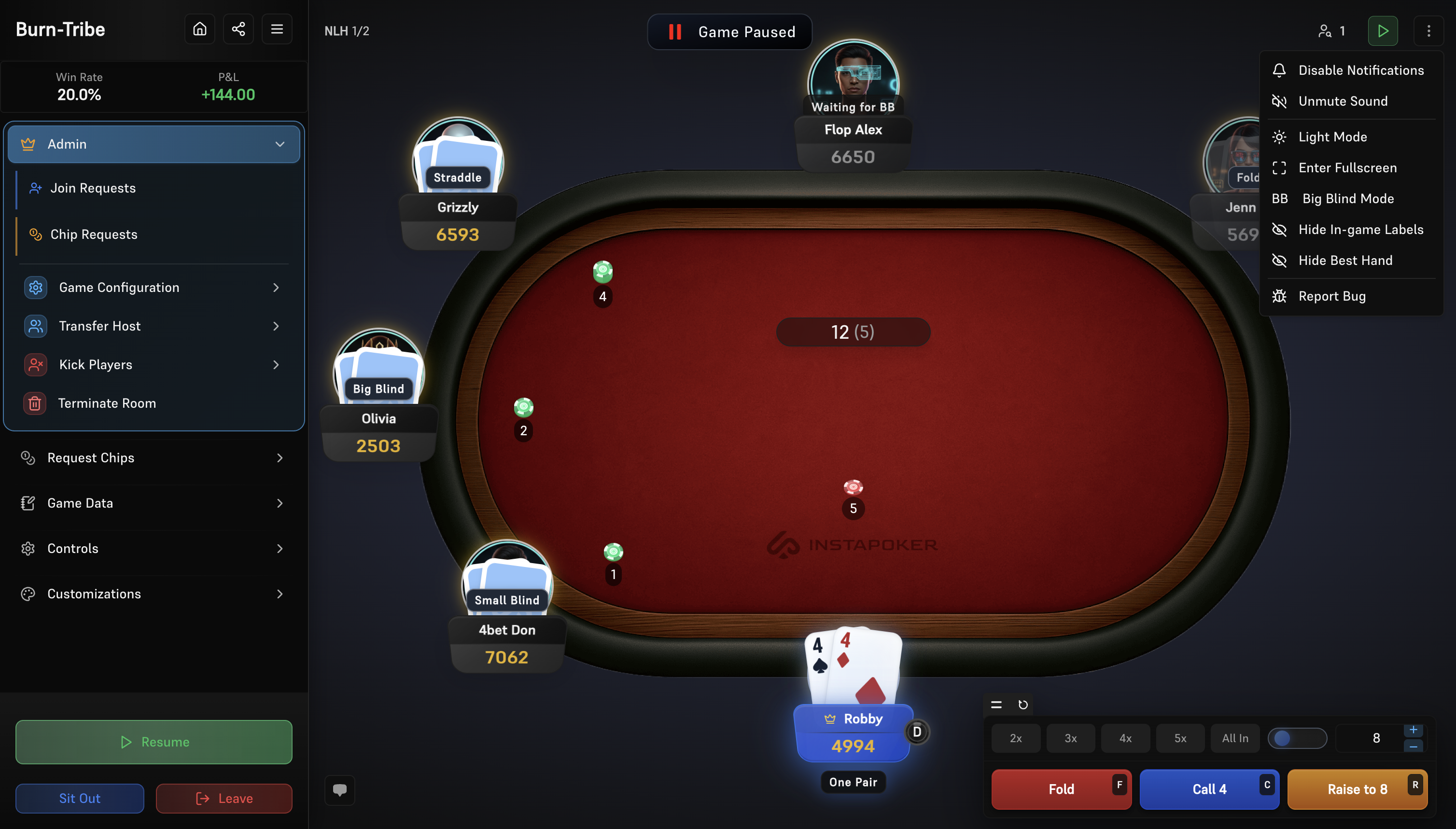
No Limit Hold’em is a community card poker game played with 2 to 10 players. Each player is dealt two private cards called hole cards. Five community cards are placed face up on the table over the course of the hand.
Players build their best five card hand using any combination of their two cards and the five community cards.
The “no limit” part means there is no cap on betting. At any point, a player can bet all of their chips, commonly known as going all in.
Basic flow of a hand
Every hand follows the same structure. Once you understand this flow, the game becomes much easier to follow.
1. Blinds
- Two players post forced bets called the small blind and big blind
- This ensures there is money in the pot from the start
2. Hole cards
- Each player is dealt two cards face down
- Only the player can see their own cards
3. Preflop betting
- Players act in turn
- Options include fold, call, or raise
4. Flop
- Three community cards are dealt face up
- Another round of betting begins
5. Turn
- A fourth community card is revealed
- Betting continues
6. River
- The fifth and final community card is dealt
- Final betting round takes place
7. Showdown
- Remaining players reveal their hands
- Best five card combination wins the pot
Hand rankings overview
To win at showdown, you need the strongest hand. The rankings are standard across most poker variants.
| Hand | Description |
|---|---|
| High Card | No matching cards |
| Pair | Two cards of same rank |
| Two Pair | Two different pairs |
| Three of a Kind | Three cards of same rank |
| Straight | Five consecutive ranks |
| Flush | Five cards of same suit |
| Full House | Three of a kind plus a pair |
| Four of a Kind | Four cards of same rank |
| Straight Flush | Straight with same suit |
| Royal Flush | Highest possible straight flush |
Key concepts to know
You do not need advanced strategy to start playing, but a few basic ideas help immediately.
Position matters
Acting later in the round lets you see opponents’ actions first, giving you more info and control in NLH. Good position makes it easier to play marginal hands and pressure your opponents.
Starting hands vary in strength
Some hole cards are worth playing, but many should be folded—hand selection is critical, especially from early positions. Starting with better hands leads to fewer tough decisions after the flop.
Betting tells a story
In NLH, how and when you bet signals confidence or weakness, and skilled players will read and react to these clues. Paying attention to betting patterns can help you spot bluffs or strength.
Pot control is important
You can manage the pot size with your betting—keeping the pot smaller helps avoid tough spots with medium hands. Knowing when to check or bet can save you chips in tricky situations.
Folding is part of winning
Winning players fold often in No Limit Hold’em, letting go of weak hands to protect their chips and stay in good spots. Folding early prevents bigger losses and keeps you in the game longer.
Why No Limit Hold’em is popular
- Simple rules that are easy to pick up
- High skill ceiling with room to improve
- Social and competitive at the same time
- Works well for both casual home games and serious play
Getting started
If you are hosting or joining a game, focus on understanding the flow and staying comfortable with decision making. You do not need perfect play to enjoy the game.
- Learn the hand order
- Follow the betting rounds
- Observe how others play
- Play more hands and build intuition
No Limit Hold’em rewards patience, observation, and timing. Once you get used to the rhythm of the game, the strategy naturally starts to click.